


When an underground mining operation is placed under care and maintenance, evaluating the feasibility of a restart is a monumental task. Re-entering legacy environments requires absolute precision, but traditional inspection methods often hit a literal wall when faced with structural instability and flooded passages. This was the exact challenge faced during a recent inspection mission aimed at safely assessing inaccessible, hazardous areas and gathering the accurate spatial data required for critical executive decision-making.
Leveraging cutting-edge asset inspection technology, the mission was successfully executed by Alfred Kelly-Gliddon in collaboration with Barry from Directional Survey and Mapping. Together, they deployed the Flyability Elios 3 drone to map the unmappable.
By replacing hazardous manual entry with remote aerial data acquisition, the team was able to navigate the complex underground architecture seamlessly, mitigating personnel risk while securing survey-grade digital assets.
Mission Overview: Real-Time Mapping and Flight Environments
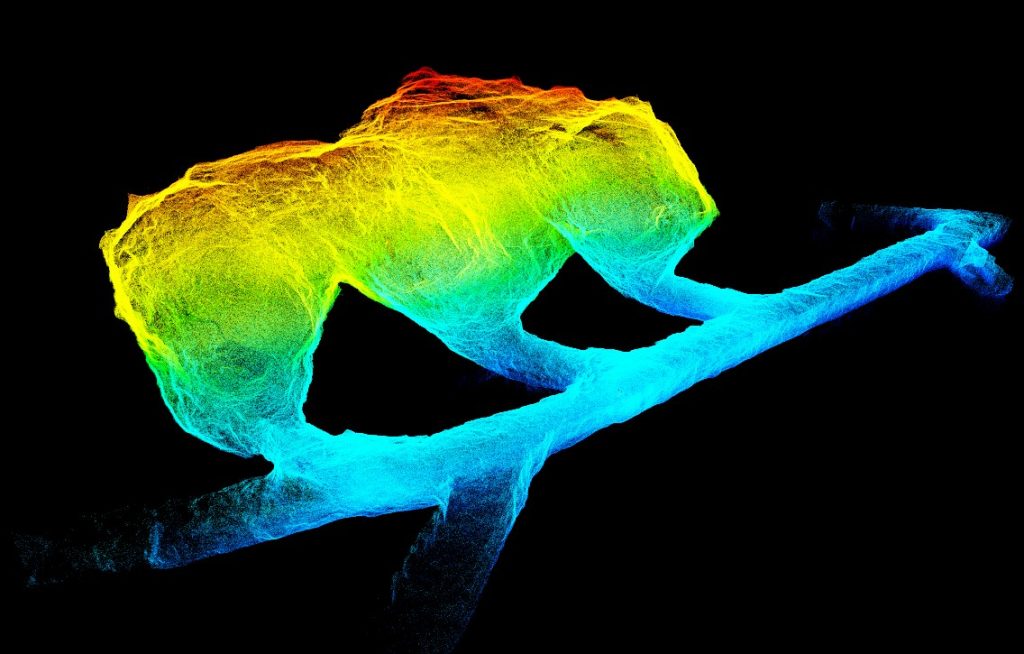
The media grid below offers a comprehensive window into the tactical execution of the mission. Video 1 showcases the high-fidelity 3D point cloud digital twin generated dynamically by the onboard LiDAR scanner. Video 2 captures the drone navigating directly through the dark, confined rock structures of the target zones, while Video 3 provides a raw look at the severe flooding hazards that completely barred human entry into these critical mine sections.
Video 1: Interactive 3D fly-through displaying the localized tunnel network and triple stope geometry generated from the Elios 3 LiDAR data.

Video 2: Flyability Elios 3 flight footage capturing tactical progression directly through the target scan areas.

Video 3: Aerial flight footage showing the extensive flooded sections encountered within the underground mine headings.

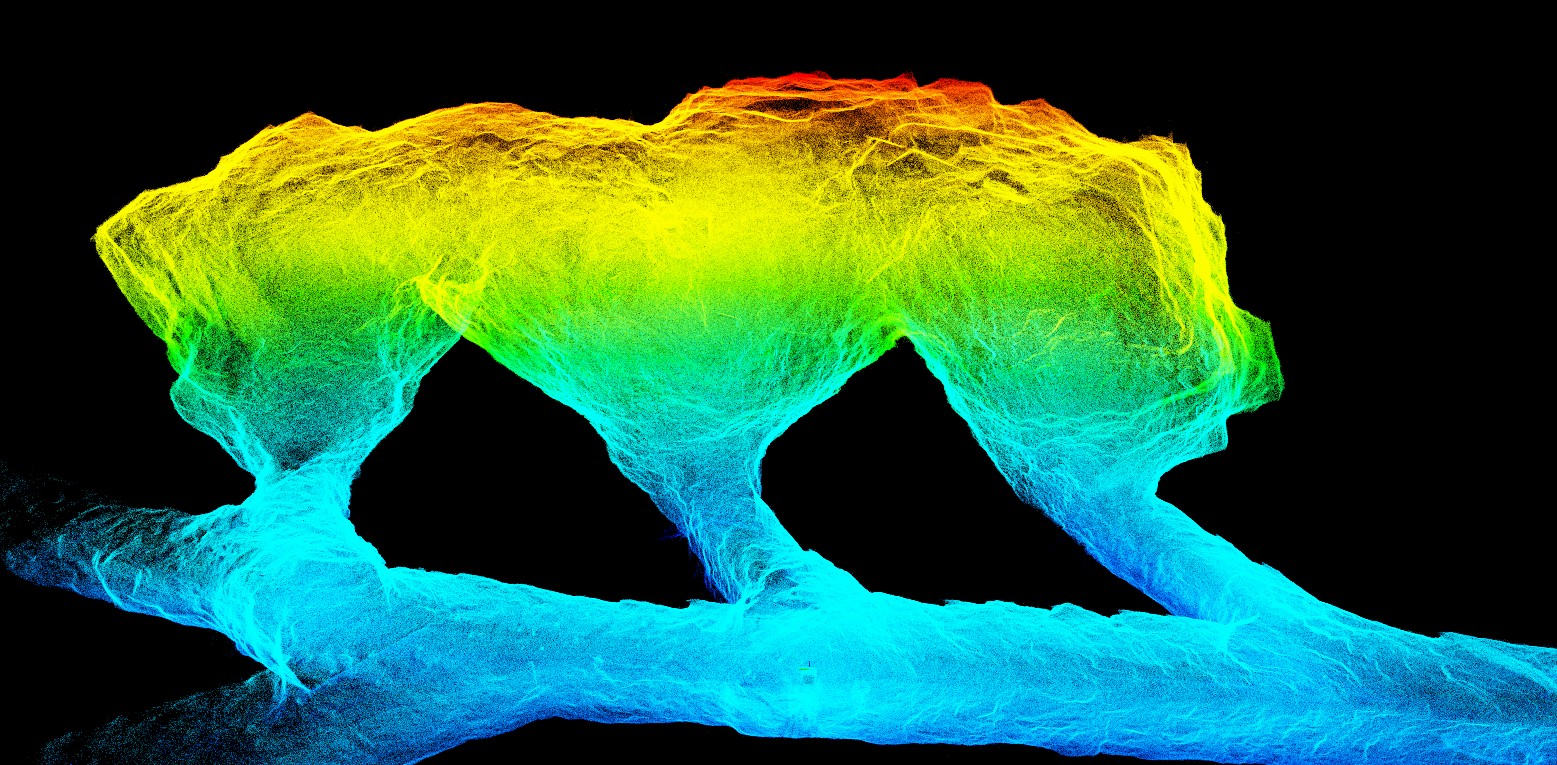
Figure 1: High-density vertical cross-section of the triple stope captured via Flyability LiDAR scanning.
The Challenge: High-Risk Zones and Data Deficits
The target site presented a complex matrix of environmental hazards that strictly prohibited personnel entry. To build a viable business case for restarting operations, the engineering team required a comprehensive assessment of a massive triple stope to determine its structural integrity and remaining ore potential. However, several critical roadblocks stood in the way:
- Severe Environmental Hazards: Extensive flooded sections and unpredictable, unstable ground conditions.
- Strict Access Control: High-risk zones where human entry was completely locked down due to safety protocols.
- Complex Underground Geometry: Zero ambient light, confined spaces, and intricate layouts that standard scanning tools couldn’t navigate.
- The Need for Survey-Grade Data: The mission didn’t just require a visual check; it demanded highly accurate, georeferenced spatial data to support rigorous engineering analysis.
Deploying traditional surveying crews into these zones was out of the question—it would have exposed personnel to extreme safety risks and resulted in incomplete, time-consuming data collection.
The Solution: Airborne LiDAR and Collision-Tolerant Drone Technology
To overcome these environmental barriers, the team deployed the Elios 3. Engineered specifically for tactical indoor and confined-space inspections, the drone’s signature collision-tolerant cage and advanced flight stabilization system allowed it to navigate the turbulent underground airwaves seamlessly.
The mission maximized the Elios 3’s specialized capabilities by utilizing:
- Tactical Confined-Space Navigation: Flying flawlessly over deep, water-filled shafts and into unstable overhead zones.
- High-Resolution Visual Payload: Capturing crisp, detailed video and imagery in pitch-black conditions using its integrated lighting arrays.
- LiDAR 3D Mapping: Rapidly digitizing the entire volume of the triple stope in real-time.
- The Elios 3 Surveying Payload: Transforming raw point clouds into highly accurate, georeferenced data assets suitable for professional mine planning software.
Execution: Inside the Triple Stope
During execution, the Elios 3 was piloted directly into the heart of the restricted triple stope. Operating beyond visual line of sight (BVLOS), the drone captured continuous, high-definition video coverage of the rock faces, supporting localized structural assessments and identifying areas of localized failure or stability.
Simultaneously, the onboard LiDAR scanner mapped millions of data points per second. By combining this flight data with the specialized Surveying Payload, the team tied the drone’s localized scans to the mine’s existing coordinate system, ensuring absolute precision across all spatial dimensions.
Results & Actionable Deliverables
The aerial inspection mission concluded with zero incidents, rapid deployment times, and a definitive dataset. The team successfully delivered:
- A Complete Visual Archive: High-resolution imagery documenting the exact physical state of previously hidden underground structures.
- Georeferenced 3D Models: A fully interactive, survey-grade digital twin of the triple stope.
- Volumetric Precision: Exact spatial measurements, clearances, and dimensions of the underground workings.
- Resource Verification: Crucial visual and spatial evidence pointing to potential remaining ore reserves within the stope.
Unlocking Value in Legacy Mining Assets
By replacing hazardous manual entry with the Elios 3, the project realized massive organizational advantages. First and foremost, personnel safety was fully protected by keeping teams well outside the danger zone. Operationally, the scan was completed in a fraction of the time a traditional survey would take, drastically reducing overall project costs.
Most importantly, the clarity of the data has removed the guesswork from the asset’s future. The engineering team now has the high-fidelity insights required to back up feasibility studies, assess structural risks, and confidently plan the economic viability of restarting mining operations.
Conclusion
The successful deployment of the Elios 3 underscores a shifting paradigm in modern mining engineering. Even in the most unforgiving underground environments, advanced drone technology bridges the gap between safety and data precision. For legacy assets under care and maintenance, tools like the Elios 3 are no longer just an alternative inspection method—they are the key to unlocking hidden value and confidently mapping the way forward.